

Laparoscopic Surgery in Kanpur – Keyhole Surgery for Digestive Problems
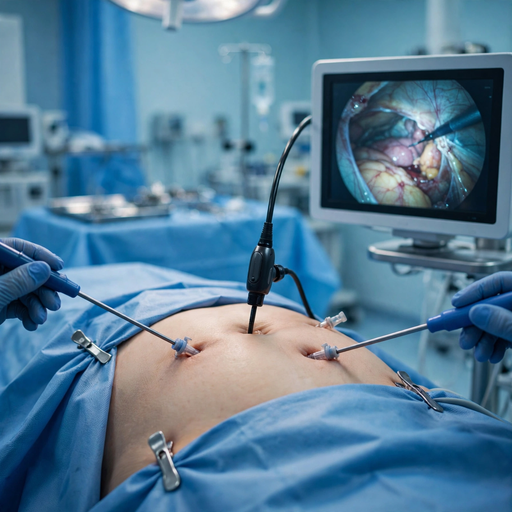
Laparoscopic surgery in Kanpur at Digestive Care Clinic is keyhole surgery — operations done through small cuts (usually 0.5–1 cm), using a laparoscope (a thin camera) and long, thin instruments, instead of one large incision. It is led by Dr. Himanshu Gupta, a GI surgeon with fellowships in advanced laparoscopic surgery, working with gastroenterologist Dr. Anurag Sachan.
Laparoscopic surgery is used for gallbladder removal, appendix removal, hernia repair, colorectal surgery, anti-reflux surgery and bariatric surgery, where suitable. Compared with open surgery, it usually means smaller scars, less pain, a shorter hospital stay and a faster return to activity. It is not right for every patient or every operation — complex, emergency or revision cases may need open surgery, and the surgeon may need to convert a keyhole operation to open surgery during the operation if that is safer. Whether keyhole surgery is suitable for you is decided only after specialist assessment.
Dr. Himanshu Gupta — MBBS (GSVM Medical College, Kanpur), DNB General Surgery (Holy Family Hospital, New Delhi), MCh GI Surgery, HPB & Liver Transplantation (PGIMER Chandigarh), with senior residency at AIIMS New Delhi and fellowships in advanced laparoscopic surgery, robotic surgery, bariatric surgery and advanced HPB surgery leads the surgical team, supported by Dr. Anurag Sachan — MBBS (AFMC Pune), MD & DM (Gastroenterology, PGI Chandigarh), Gold Medalist — and Dr. Saraswati Kushwah, MBBS, MD (Internal Medicine). The clinic has a Hybrid OT equipped for therapeutic gastroenterology and minimally invasive surgeries, and a procedure room for minor surgical procedures.
Book a consultation for laparoscopic surgery in kanpur: Call +91-95114 00141 (Mon–Sat, 4:00 PM – 8:00 PM) or visit 174 W-2 (Doon House), Damodar Nagar, Kanpur, Uttar Pradesh 208027.
Laparoscopic Surgery Procedures in Kanpur
- Laparoscopic Cholecystectomy (Gallbladder Removal) — The most common keyhole operation — removal of the gallbladder for gallstones causing pain, infection or repeated attacks. Usually a daycare or short-stay procedure.
- Laparoscopic Appendectomy — Removal of the appendix for appendicitis, usually as an emergency keyhole operation.
- Laparoscopic Hernia Repair — Keyhole repair of groin, umbilical and incisional hernias, often with mesh, especially for hernias on both sides or recurrent hernias.
- Laparoscopic Colorectal Surgery — Keyhole removal of part of the colon or rectum for cancer, large polyps and other bowel problems in suitable patients.
- Laparoscopic Anti-Reflux & Bariatric Surgery — Keyhole fundoplication for reflux, hiatal hernia repair, and sleeve gastrectomy and gastric bypass for suitable weight-loss patients.
Who Needs Laparoscopic Surgery?
Whether laparoscopic surgery in kanpur is advised for you is decided only after a specialist assessment. It is generally considered for people who:
- Gallstones causing pain, infection or repeated attacks
- Appendicitis needing appendix removal
- A hernia that may be repaired by keyhole surgery
- Colorectal cancer or a large polyp in a suitable patient
- Reflux or a hiatal hernia needing surgery
- Severe obesity where bariatric surgery is advised, on specialist assessment
How Does Laparoscopic Surgery Work? Procedure Steps
- Consultation and tests: The surgeon reviews symptoms, scans, endoscopy and blood tests, and checks fitness for general anaesthesia.
- Choosing the approach: Laparoscopic or open surgery is chosen with you, and the recovery, risks and chance of conversion to open surgery are explained.
- Preparation: Fasting and medicine instructions, as advised. Tell the team about all medicines, allergies and past operations.
- Operation: Keyhole surgery under general anaesthesia, usually taking 1–3 hours depending on the operation.
- Recovery and follow-up: Usually a short hospital stay, then wound care, diet and activity advice, and clinic follow-up.
Comparing Your Options
| Option | How it works | Best for | Recovery |
|---|---|---|---|
| Laparoscopic surgery | Small keyhole cuts, camera and instruments | Gallbladder, appendix, hernia, colorectal | Shorter stay, faster recovery |
| Open surgery | Larger incision | Complex, emergency or revision cases | Longer recovery |
| Robotic surgery | Surgeon-controlled robotic instruments | Complex abdominal surgery, where advised | Depends on the operation |
Recovery After Laparoscopic Surgery
- First days: Mild abdominal and shoulder pain (from the gas used in keyhole surgery), controlled with pain relief; walking from the same day.
- Wounds: Keep the small dressings clean and dry, watch for redness, discharge or fever.
- Diet: Light food first, then a gradual return to normal food, as advised for your operation.
- Activity: Light activity in a few days, and a return to work in 1–2 weeks for most keyhole operations.
Is Laparoscopic Surgery Safe? Risks and Complications
Possible risks depend on the operation and include:
- Bleeding, infection or wound problems
- Injury to bowel, blood vessels or other organs during keyhole surgery
- Conversion to open surgery during the operation, if that is safer
- Blood clots or anaesthesia-related complications
- The operation not achieving the expected result, or the condition coming back
Serious complications are uncommon. Your surgeon will explain the risks for your situation before the operation. Seek urgent medical care if you have severe pain, continuous vomiting, fever, difficulty breathing, chest pain, or bleeding after surgery.
Laparoscopic Surgery Cost in Kanpur
The cost of laparoscopic surgery in kanpur depends on the operation, your assessment, anaesthesia, and hospital stay. Costs vary widely between hospitals and cases.
For the current price, call +91-95114 00141. Your surgeon will confirm the exact cost after your consultation, with transparent pricing and no hidden charges.
What to Expect at Your First Consultation
Bring your scans, endoscopy, biopsy and blood reports, a list of medicines you take, and a note of allergies and past operations. The surgeon will take a history, examine you, and review your reports with you. You will be told whether further tests are needed, what the options are, and what the next step is — that may be medicines, endoscopic treatment, a period of watching and review, or surgery. There is no pressure to decide at the first visit. Questions to ask include: what operation is being advised and why, what it can and cannot achieve, what the recovery looks like, what the risks are for you, what the alternatives are, where the operation would be done, and what the cost is after assessment.
Follow-up Care After Surgery
Follow-up is part of the treatment, not an afterthought. After surgery you will have clinic reviews to check the wound, review histopathology where tissue was removed, and plan any further treatment — such as oncology follow-up, diabetes or nutrition review, or endoscopic surveillance. Diet, activity and medicines are adjusted at each visit, and you will be told whom to contact and when to seek urgent care. The clinic’s gastroenterology, endoscopy, FibroScan and pathology teams are in the same building, so medical follow-up and surgical follow-up are coordinated rather than left to you to arrange alone.
Related Services at Digestive Care Clinic, Kanpur
- Robotic Surgery in Kanpur — Robotic-assisted surgery
- Gallbladder Surgery in Kanpur — Gallbladder and bile duct surgery
- Hernia Repair in Kanpur — Hernia repair
- Colorectal Surgery in Kanpur — Colon and rectal surgery
- Surgery in Kanpur — All surgery services
- Endoscopy in Kanpur — Endoscopy
Book Your Laparoscopic Surgery Consultation in Kanpur
If you have been advised laparoscopic surgery, or you want to know whether surgery is the right treatment for you, book a consultation at Digestive Care Clinic, Kanpur. Your surgeon will assess you, explain the options, and help you decide on the next steps.
Digestive Care Clinic, 174 W-2 (Doon House), Damodar Nagar, Kanpur, Uttar Pradesh 208027. Call / WhatsApp: +91-95114 00141. Email: digestivecareclinic@gmail.com. OPD Hours: Monday – Saturday, 4:00 PM – 8:00 PM. Appointments: https://digestivecareclinic.com/book-an-appointment/ | https://digestivecareclinic.com/contact-us/
Why Choose Digestive Care Clinic for Laparoscopic Surgery in Kanpur?
- Laparoscopic-trained surgeon: Dr. Himanshu Gupta holds fellowships in advanced laparoscopic surgery, with MCh GI surgery training.
- Keyhole first where suitable: Laparoscopic surgery is considered for gallbladder, appendix, hernia, colorectal, reflux and bariatric operations in suitable patients.
- Daycare where suitable: Many keyhole operations are daycare or short-stay procedures.
- Medical and surgical care together: Gastroenterology, endoscopy, FibroScan and pathology in one clinic, so non-surgical options are considered first.
- Clear, honest counselling: Keyhole or open, and the chance of conversion — explained before you decide.
- Trusted in Kanpur: 500+ patients successfully treated and 100+ advanced therapeutic GI procedures performed, as listed by the clinic.
Frequently Asked Questions
Keyhole surgery — operations done through small cuts using a camera and thin instruments, instead of one large incision. It is used for gallbladder, appendix, hernia, colorectal, reflux and bariatric operations in suitable patients.
Smaller scars, less pain, a shorter hospital stay and a faster return to activity than open surgery, for suitable patients and operations.
No. Complex, emergency or revision cases may need open surgery, and the surgeon may need to convert a keyhole operation to open surgery during the operation if that is safer.
At Digestive Care Clinic: gallbladder removal, appendix removal, hernia repair, colorectal surgery, anti-reflux surgery and bariatric surgery, where suitable, by Dr. Himanshu Gupta.
Most people return to light activity in a few days and to work in 1–2 weeks. Recovery depends on the operation.
Both are minimally invasive. In laparoscopic surgery the surgeon holds the instruments directly; in robotic surgery the surgeon controls robotic instruments from a console, which can give more precision in complex operations.
The cost depends on the operation and hospital stay. Call Digestive Care Clinic on +91-95114 00141 for the current price after consultation.
No — keyhole surgery uses small cuts, usually 0.5–1 cm, which leave small scars. The number and size of cuts depend on the operation.