

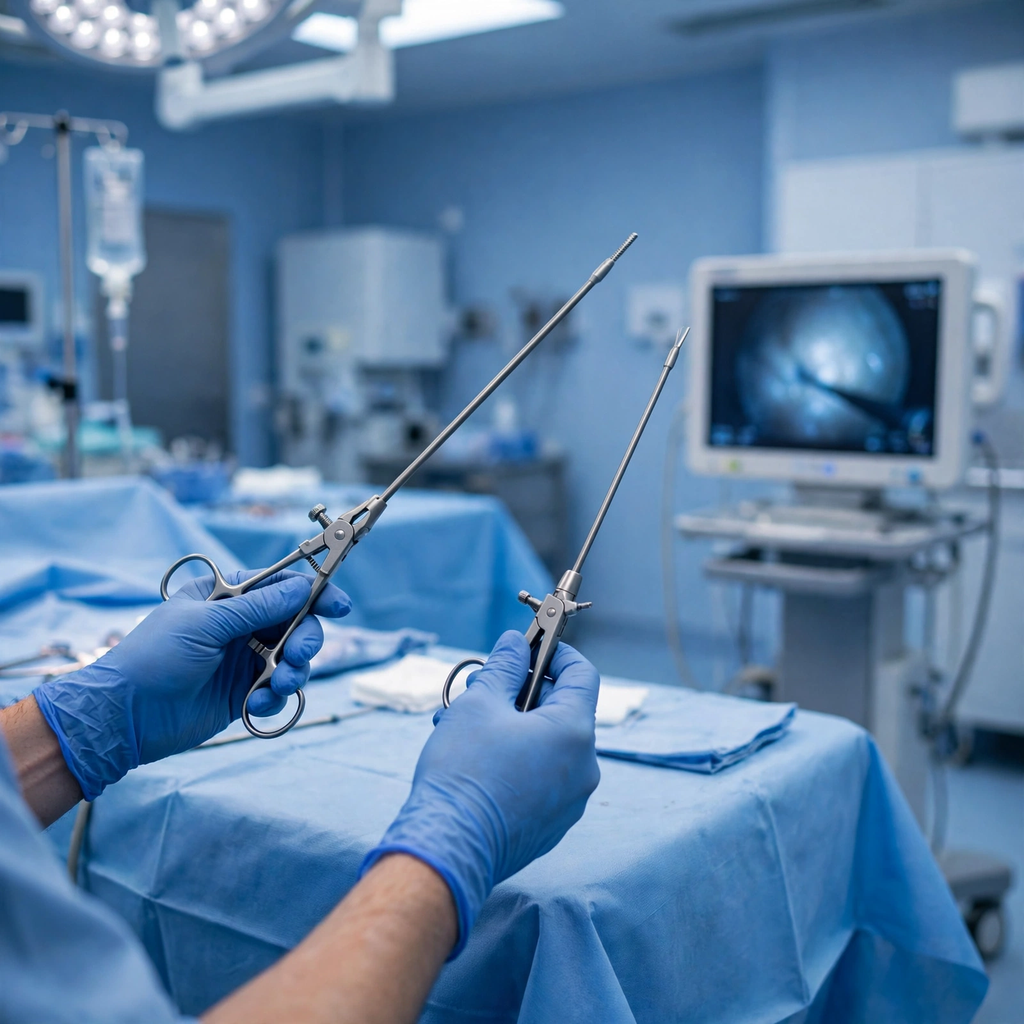
If you have been advised an abdominal operation — for the gallbladder, appendix, hernia or another condition — you will probably hear two terms: laparoscopic (keyhole) surgery and open surgery. Patients naturally ask which one is better, which hurts less, and which leaves smaller scars. The truthful answer is that neither approach is best for everyone. Laparoscopic surgery suits many patients and many operations, but open surgery is sometimes the safer or more appropriate choice. This guide compares the two approaches fairly, so you understand what your surgeon is considering when a plan is made for you. At Digestive Care Clinic, Kanpur, surgical patients are assessed by Dr. Himanshu Gupta, our GI and HPB surgeon, and the approach is chosen only after specialist assessment.
What Is Laparoscopic Surgery?
In laparoscopic surgery, the surgeon operates through a few small cuts, usually with a thin camera called a laparoscope that projects a magnified view onto a screen. The abdomen is gently inflated with gas to create working space, and long, fine instruments are passed through the small cuts to do the operation. Gallbladder removal, appendix removal, many hernia repairs and several other abdominal procedures are commonly done this way. Our page on laparoscopic surgery in Kanpur describes the procedures offered at the clinic in more detail.
What Is Open Surgery?
In open surgery, the surgeon makes one larger cut to see and reach the operating area directly. This is the traditional approach, and it remains essential in many situations: very large or complex problems, severe infection or inflammation, dense scarring from previous operations, emergencies where speed and direct access matter, and some large cancer operations. Open surgery is not an outdated or inferior method — for the right patient and the right problem, it is the correct and safest method.
Laparoscopic vs Open Surgery: A Comparison
| Feature | Laparoscopic (Keyhole) Surgery | Open Surgery |
|---|---|---|
| Approach | Camera and fine instruments through a few small cuts, guided by a screen | Direct view and access through one larger cut |
| Incision | Usually a few small incisions, each typically about 0.5 to 1 cm, varying by procedure | One larger incision, length depending on the operation |
| Hospital stay | Usually shorter; some procedures are typically daycare or need a short stay | Typically longer than keyhole surgery for the same procedure |
| Recovery | Usually quicker return to light activities and work for many patients | Typically a slower, more gradual return to full activity |
| Pain after surgery | Often less wound pain, though shoulder-tip discomfort from the gas can occur | Often more pain at the single larger wound initially |
| Scars | Several small scars that usually fade and are less noticeable | One larger scar at the incision site |
| Suitability | Suitable for many planned gallbladder, appendix, hernia and other procedures | Often preferred for very complex, emergency, heavily scarred or some large cancer cases |
These are general comparisons only. Your actual stay, recovery and pain experience depend on the operation itself, your health, and how your body responds — no surgeon can guarantee a particular number of days or a particular result.
Benefits of Laparoscopic Surgery
- Smaller wounds: several small cuts instead of one large incision, which usually means less wound pain and smaller scars.
- Usually faster recovery: many patients walk sooner, eat sooner and return to light work earlier than after open surgery for the same problem.
- Usually shorter hospital stay: for suitable procedures, discharge is typically earlier.
- Good view for the surgeon: the camera gives a magnified, well-lit view of the operating area, including places that are hard to see directly.
- Lower chance of some wound problems: smaller wounds generally carry a lower risk of wound infection and incisional hernia than a large incision, though the risk is not zero.
Limitations of Laparoscopic Surgery
Keyhole surgery is not suitable for every patient or every operation. Dense internal scarring from previous surgery or severe inflammation can make it unsafe. Some very large tumours or complex problems need direct access. Anaesthesia with the abdomen inflated may not suit a small number of patients with certain heart or lung conditions. And there is always a possibility, discussed beforehand, that a laparoscopic operation may need to be converted to an open one during surgery for safety — for example if bleeding cannot be controlled or the anatomy is unclear. Conversion is a safety decision, not a failure, and it does not mean something has gone wrong.
When Robotic Surgery Fits In
Robotic-assisted surgery is a further development of the keyhole approach: the surgeon controls robotic arms holding a camera and instruments from a console, with wristed instruments that can move in small spaces with great precision. It may be considered for selected complex abdominal operations where that precision is helpful. Suitability depends on the procedure, the patient and the facilities involved, and it is decided only after specialist assessment. You can read more on our page about robotic surgery in Kanpur.
Recovery: What to Expect
After laparoscopic surgery, mild pain at the small cuts, shoulder-tip discomfort, bloating and tiredness for a few days are common and usually settle with prescribed medicines and walking. After open surgery, pain at the larger wound is typically stronger at first, movement is encouraged gradually, and return to work — especially physical work and heavy lifting — typically takes longer. In both approaches, following instructions on wound care, activity, diet and medicines matters more than the approach itself. Report fever, increasing pain, wound discharge, vomiting, jaundice or abdominal swelling promptly, whichever type of surgery you had.
Scars: What to Expect
Laparoscopic scars are small and usually fade over months, though their final appearance varies with your skin type and healing. An open scar is longer and more visible, and also fades with time. Scar appearance should be a secondary factor in choosing an approach: safety and complete treatment of the problem come first, and your surgeon will explain the expected incisions for your operation before you decide.
How the Right Approach Is Chosen for You
The decision takes into account the exact problem and its severity, your scans and reports, previous abdominal operations, other medical conditions, and the facilities needed. For an overview of how these decisions are approached across procedures, see our surgery in Kanpur page. Be cautious of any claim that one approach is always better, painless or guaranteed — honest surgical advice explains the trade-offs in your specific case.
Frequently Asked Questions
1. Is laparoscopic surgery always better than open surgery?
No. It offers smaller wounds and usually faster recovery for suitable patients, but open surgery is safer or more appropriate in some complex, emergency or heavily scarred cases. The better approach is the one that fits your condition, decided after specialist assessment.
2. Can a laparoscopic operation turn into an open operation?
Yes. If the surgeon finds severe inflammation, dense scarring, unclear anatomy or bleeding that cannot be controlled safely, the operation may be converted to open surgery. This is a planned safety possibility, and your surgeon will usually discuss it before the operation.
3. How many days will I stay in hospital after laparoscopic surgery?
Stay is usually shorter than after open surgery, and some procedures are typically daycare or need only a short stay. The exact length varies with the operation and your recovery, so it cannot be guaranteed in advance — ask your surgeon what is typical for your procedure.
4. Will laparoscopic surgery leave no scars?
No surgery is completely scar-free. Laparoscopic surgery leaves a few small scars that usually fade and are less noticeable than a single large open scar, but small marks remain, and their appearance varies from person to person.
5. What is the cost difference between laparoscopic and open surgery in Kanpur?
Cost depends on the procedure, equipment used, hospital stay, tests and your individual condition, so we do not quote fixed prices for either approach here. Please call the clinic for cost and assessment details before deciding.
Book an Assessment in Kanpur
If you have been advised surgery and want to understand whether a keyhole approach is suitable for you, consult Dr. Himanshu Gupta (MBBS, GSVM Kanpur; DNB General Surgery; MCh GI Surgery, HPB and Liver Transplant, PGIMER Chandigarh; fellowships in laparoscopic, robotic and bariatric surgery) at Digestive Care Clinic, 174 W-2 (Doon House), Damodar Nagar, Kanpur 208027. Where gastroenterology assessment is needed first, Dr. Anurag Sachan, our gastroenterologist, is also available at the clinic. For laparoscopic surgery in Kanpur, call or WhatsApp +91-9511400141 — OPD timings are Monday to Saturday, 4 PM to 8 PM. The approach for your operation will be decided only after specialist assessment.