

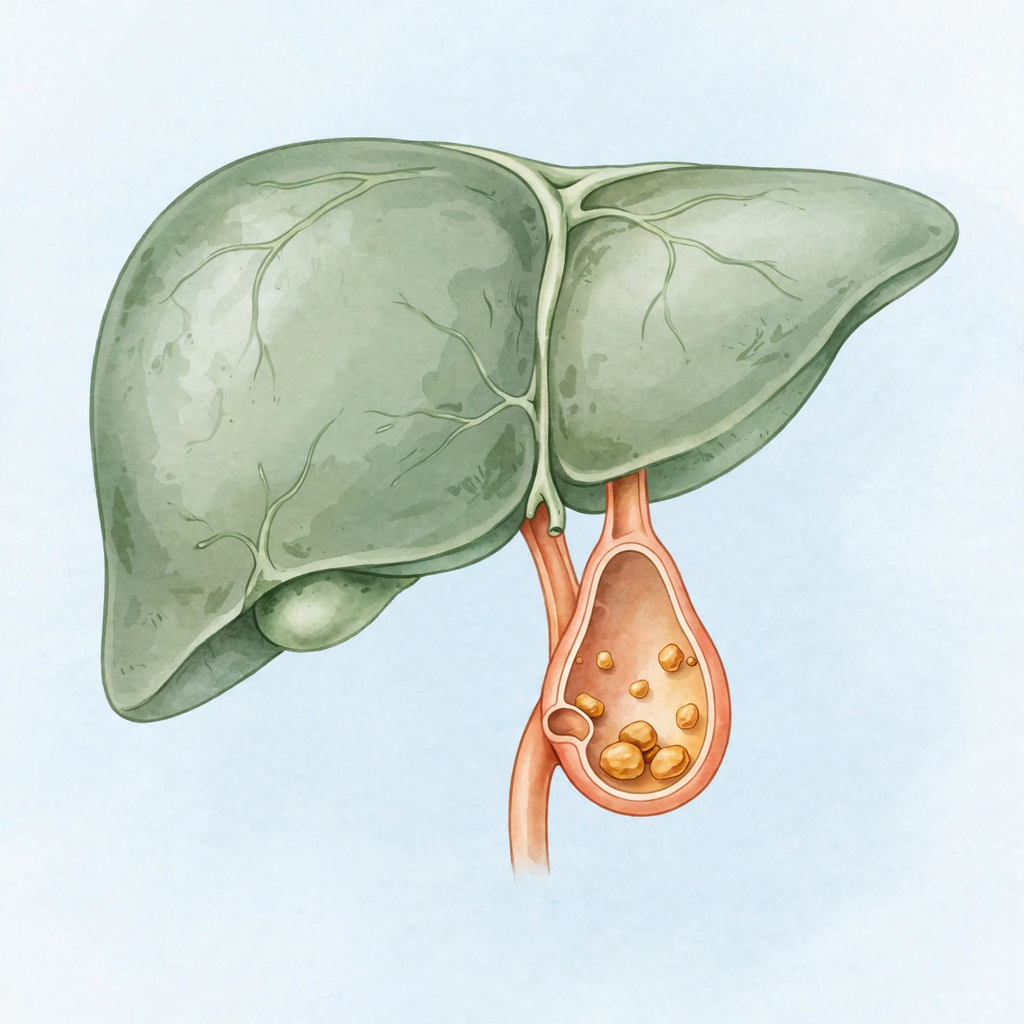
Many people discover gallbladder stones during an ultrasound done for another reason, and their first question is simple: do I need an operation? The honest answer is that not every stone needs surgery. Some stones stay silent for years, while others cause repeated pain, infection or blockage of the bile duct. This guide explains the symptoms to watch for, the situations where surgery is usually advised, and what gallbladder removal involves, so you can have an informed discussion with your specialist. At Digestive Care Clinic in Damodar Nagar, Kanpur, patients are assessed by Dr. Himanshu Gupta, our GI and HPB surgeon, and the decision for surgery is taken only after specialist assessment of your symptoms, reports and overall health.
What Are Gallbladder Stones?
The gallbladder is a small pouch under the liver that stores bile, a fluid that helps digest fat. When bile contains too much cholesterol or bilirubin, or the gallbladder does not empty properly, hard deposits can form inside it. These are gallbladder stones, also called gallstones or cholelithiasis. They can be as small as a grain of sand or as large as a golf ball, and a person may have one stone or many.
Stones themselves do not always cause trouble. Problems begin when a stone blocks the outlet of the gallbladder or slips into the bile duct. That blockage can cause sudden pain, inflammation of the gallbladder, infection, jaundice, or inflammation of the pancreas. It is these complications, rather than the mere presence of a stone on a scan, that usually drive the decision towards surgery.
Common Symptoms of Gallbladder Stones
Silent stones cause no symptoms at all. When symptoms do appear, they often follow a pattern:
- Biliary colic: sudden pain in the upper right abdomen or centre of the upper abdomen, often after a heavy or fatty meal, sometimes spreading to the right shoulder or back. The pain usually settles within a few hours.
- Nausea and vomiting along with the pain.
- Bloating, indigestion and discomfort after eating, which many people mistake for simple acidity or gas.
- Repeated attacks: pain that keeps coming back over weeks or months is an important warning sign.
If you also develop fever, yellowing of the eyes or skin (jaundice), dark urine, pale stools, or severe continuous pain, seek medical care promptly. These can suggest infection, a blocked bile duct or pancreatitis, which need urgent evaluation.
When Is Surgery Usually Advised?
Surgery to remove the gallbladder is called cholecystectomy. Removing the gallbladder, rather than only the stones, is the standard approach because stones tend to form again if the gallbladder is left in place. You can live a normal life without a gallbladder; bile simply flows directly from the liver to the intestine.
Your surgeon may advise gallbladder surgery in Kanpur in situations such as:
- Repeated attacks of biliary colic that disturb your daily life, sleep or work.
- Acute cholecystitis, meaning inflammation or infection of the gallbladder, usually with pain, fever and tenderness.
- Stones that have slipped into the bile duct, causing jaundice or infection of the duct.
- Gallstone pancreatitis, where a stone triggers inflammation of the pancreas.
- A gallbladder that no longer functions well, or certain gallbladder polyps or wall changes found on imaging, where the specialist judges removal to be safer.
Each case is different. The size and number of stones matter less than your symptoms, scan findings, blood reports and other medical conditions. That is why a decision is made only after specialist assessment, and why you should not rely on stone size alone to decide.
When Surgery May Not Be Needed Right Away
If stones were found by chance, you have never had pain or complications, and your gallbladder looks otherwise normal, many specialists suggest observation rather than immediate surgery. You may be advised to watch for symptoms, eat regular balanced meals, avoid very heavy fatty meals, and return if attacks begin. Medicines have a limited role and are not a reliable way to dissolve most stones, so do not start or continue any treatment on your own without medical advice. If your situation changes — pain starts, attacks repeat, or a scan shows new changes — the plan can be reviewed.
How Gallbladder Surgery Is Done
Most gallbladder operations today are done by the keyhole method. Through a few small cuts, the surgeon uses a camera and fine instruments to remove the gallbladder. You can read more about this approach in our guide to laparoscopic surgery in Kanpur. In some cases — for example severe inflammation, dense scarring from previous surgery, or a concern found during the operation — the surgeon may need to do an open operation through a larger cut, or convert from keyhole to open surgery for your safety. This possibility is usually discussed before the operation.
Before surgery, you will typically have blood tests, an ultrasound and an anaesthesia assessment. Tell your team about all medicines you take, any allergies, and conditions such as diabetes or previous abdominal surgery.
Recovery After Gallbladder Removal
Recovery varies from person to person and depends on whether the operation was keyhole or open, and on your general health. After laparoscopic surgery, many patients are able to walk the same day and return to light activities within a short period, gradually resuming normal work as advised by their surgeon.
For eating, most people are advised to start with light, low-fat meals and then return to a normal balanced diet as tolerated. There is no single diet that suits everyone after gallbladder removal, so follow the guidance given at discharge and mention persistent loose stools, severe pain, fever, jaundice or vomiting at your follow-up visit, as these need review.
Risks and Possible Complications
Cholecystectomy is a commonly performed operation, but like any surgery it carries some risks. These can include bleeding, infection, injury to the bile duct or nearby structures, bile leak, blood clots, and risks related to anaesthesia. Your surgeon will explain the risks that apply in your case and the steps taken to reduce them. Ask questions until you are clear — a good decision is an informed one, and no operation should be presented as completely risk-free or as a guaranteed outcome.
Questions to Ask Your Surgeon
- Are my symptoms actually from the stones, or could something else be causing them?
- What happens if I wait, and what warning signs should bring me back sooner?
- Am I suitable for keyhole surgery, and when might open surgery be needed?
- What tests do I need before surgery, and how should I prepare?
- What follow-up will I need after the gallbladder is removed?
Frequently Asked Questions
1. Can gallbladder stones be removed without removing the gallbladder?
In standard practice the whole gallbladder is removed, because stones usually form again if only the stones are taken out. Whether this applies to you, and whether any other option is suitable, can only be decided after specialist assessment of your scans and symptoms.
2. Is gallbladder surgery urgent, or can it be planned?
It depends on your condition. Repeated pain attacks are often treated with a planned operation, while infection, jaundice or pancreatitis may need urgent hospital care and earlier surgery. Severe continuous pain, fever or yellow eyes should not be waited out at home.
3. Will I need a special diet for life after gallbladder removal?
Most people return to a normal balanced diet. Some find very fatty meals cause discomfort or loose stools initially, so light meals at first and gradual changes usually help. Follow the diet advice given by your treating team.
4. How long does recovery take after keyhole gallbladder surgery?
Recovery is usually quicker after keyhole surgery than after open surgery, and many people resume light activities within a short period. The exact time varies with your health and the nature of your work, so ask your surgeon what is realistic for you rather than relying on a fixed number of days.
5. What is the cost of gallbladder stone surgery in Kanpur?
Cost depends on the type of surgery, hospital stay, tests and your individual condition, so we do not quote a fixed price here. Please call the clinic for cost and assessment details, and our team will guide you.
Book an Assessment in Kanpur
If you have gallbladder stones and repeated pain, fever, jaundice or vomiting, do not ignore the attacks. For gallbladder stones surgery in Kanpur, you can consult Dr. Himanshu Gupta (MBBS, GSVM Kanpur; DNB General Surgery; MCh GI Surgery, HPB and Liver Transplant, PGIMER Chandigarh) at Digestive Care Clinic, 174 W-2 (Doon House), Damodar Nagar, Kanpur 208027. Gastroenterology assessment by Dr. Anurag Sachan is also available at the clinic where needed. OPD timings are Monday to Saturday, 4 PM to 8 PM. Call or WhatsApp +91-9511400141 to book an appointment and to ask about cost and assessment. The right treatment for you will be decided only after specialist assessment.